Excerpt: Refinery 29 October 2025
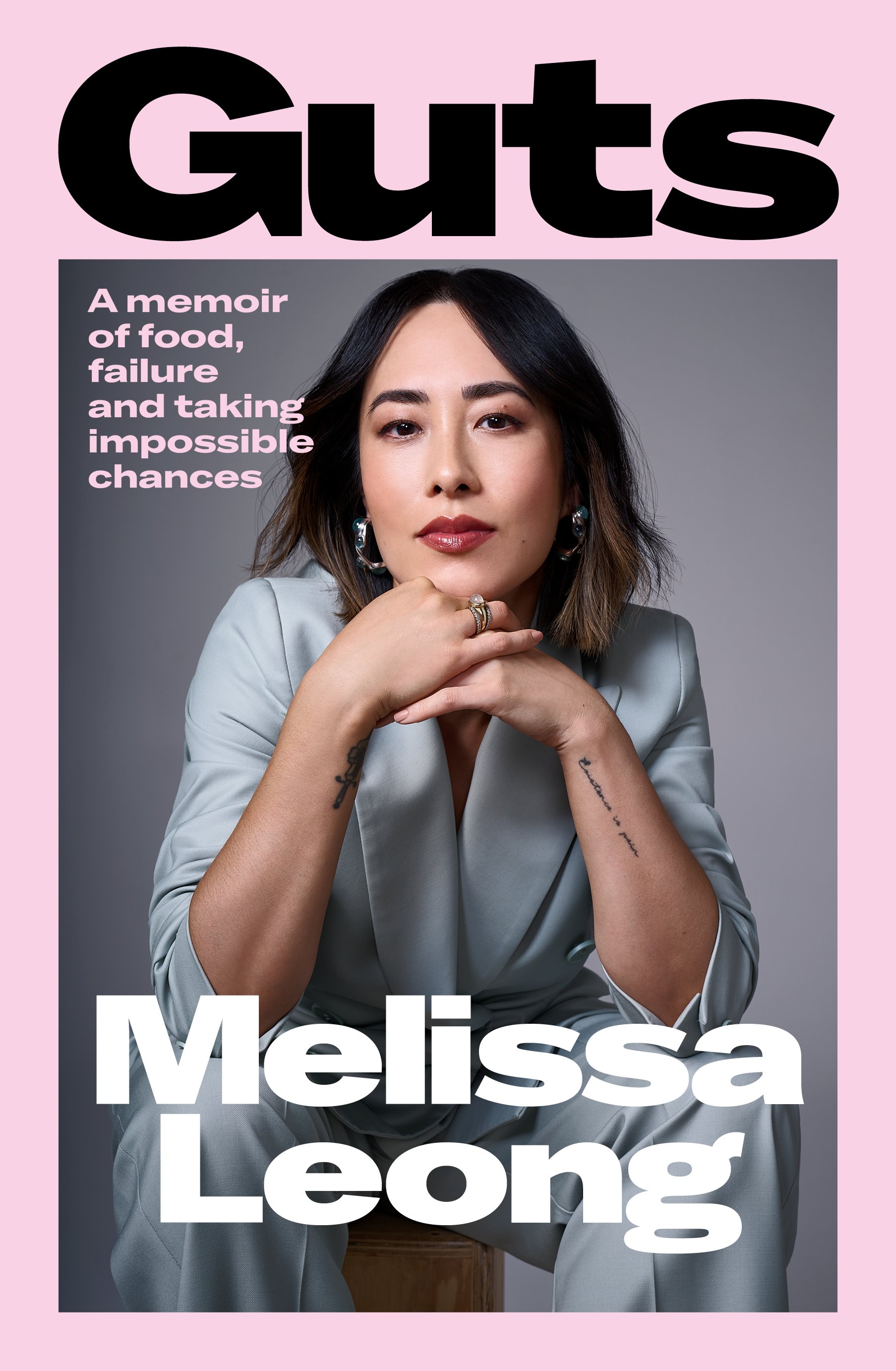
GUTS by Melissa Leong
Melissa Leong is someone who doesn’t ask for permission; she never has. When she blew up her perfectly respectable and enviable life at 30, leaving her job and her city, she wasn’t chasing a dream or even escaping a nightmare. She just knew one thing: "If I don't change it now, when am I going to change it?"
Her new memoir, Guts, is built on moments like this. Not the post-therapy actions of change, but the terrifying, uneasy ones that you step into before you know if they’ll save you or swallow you whole. For Leong, the decision to stop the train and move the tracks came after a road trip to Tasmania, scallop pies and all. "Where I was headed seemed perfectly fine," she reflects. "But it didn't feel like a destination I wanted to go to."
That instinct, to cut ties and risk it all for something more aligned, whatever it may be, sits at the heart of Guts. It’s a memoir about food, yes, but also about allowing yourself to fully fall apart, before you even attempt to claw your way back.
A first-generation Singaporean Chinese woman in Australia, Leong writes candidly about the psychic weight of being both highly visible and routinely misunderstood. In her early years, she tried to shrink herself to fit. There’s a story in the book about her 12-year-old self, sunglasses on in the backseat, willing herself to be less Asian in order to appear more attractive to the cute boys walking past. "Those almond eyes, through no fault of their own, felt like a flaw to me in that moment," she writes. It’s a gut-punch of a paragraph that says more about the world we live in than any diversity seminar ever could.
Years later, that same girl walks into her first meeting at MasterChef Australia and announces, "I know what I bring to the table. I look like this, but I sound white." She says it wasn’t to provoke the panel, just a fact. The awkwardness in the room, she admits, was "rightly delicious". In our interview, Leong recalls that moment with her signature mix of grace and grit.
“I knew that by saying it, it would make people uncomfortable. But it’s just the reality of where we’re at. If I had a thick Chinese accent and looked like this, I probably wouldn’t have gotten the job, even if I could do the job.”